

By Professor Abdullahi Danladi
Adanladi08@gmail.com
(+234)80392308479
11/12/2025
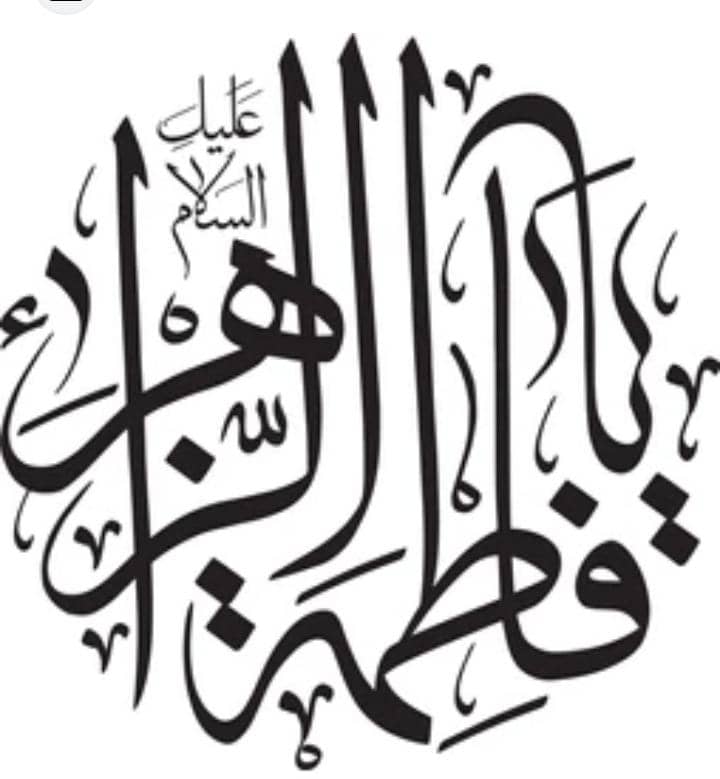
As the world marks the radiant birth of Sayyida Fatima al-Zahra (AS), one finds that ordinary language collapses before the immensity of her spiritual stature. Fatima is not merely remembered; she is witnessed as a living proof of the Qur’ānic affirmation that “Allah only desires to remove impurity from you, O People of the House, and to purify you completely” (Q. 33:33). This verse, known as the Āyat al-Taṭhīr, is not a ceremonial honor; it is a metaphysical declaration. It positions her not only within the Prophet’s household, but within the very architecture of divine purity. She is not simply the daughter of Muhammad (SAWA), she is the one whose essence was purified by the Divine Himself.
The Prophet’s statement, “Fatima is a part of me; whatever harms her harms me, and whatever pleases her pleases me,” is not mere affection. It is an unveiling of reality. A part is not separated from the whole; it participates in its very nature. Thus her pain becomes prophetic pain, and her pleasure prophetic pleasure. These are metaphysical correspondences, not sentimental bonds. Her soul is fashioned from the same primordial light as the Prophet (SAWA), as affirmed in the narrations: “Allah created me and ʿAlI and Fatima and Hasan and Husayn from one light.” In this light, Ibn Sīnā’s notion of perfected beings, those whose souls reflect the Divine without distortion, finds its fullest human expression in Fatima al-Zahra (AS).
Her worship reflects this cosmic purity. She did not stand in the night as an ordinary worshipper. Her prayer was the ascension of a soul in complete harmony with divine command, an earthly echo of the Qur’ānic archetype “Indeed, the righteous will be in the midst of light” (Q. 57:12). When she stood in her miḥrāb until her feet swelled, the Prophet (SAWA) revealed the reason: “O Fāṭima, Allah is proud of you before His angels because of your worship.” This is spirituality not merely in practice, but in essence.
Her position to the Prophet is therefore not defined by biological lineage but by spiritual consubstantiality. She is the inheritor of his compassion, the guardian of his moral vision, and the extension of his inner light after the seal of revelation. When the verse “And give the near ones their due right” (Q. 17:26) was revealed, it was Fatima (AS) whom the Prophet called and gifted the Fadak orchard to. Her right was not political, her right was Qur’ānic. She embodied the category of “al-qurbā,” those near to the Prophet not merely by blood but by divine designation.
Her relationship with Imām Ali (AS) is a union that defies historical analogy. If the Prophet (SAWA) is the bearer of revelation, ʿAli is the locus of its implementation. The Qur’ān testifies to his spiritual rank: “Indeed, your guardian is only Allah, His Messenger, and those who believe, those who establish prayer and give zakāh while in the state of bowing” (Q. 5:55). Fatima (AS) stands as the luminous axis between these two poles, the bridge between nubuwwah and imāmah. Their marriage was decreed not in Medina but in the celestial realm, for the Prophet said: “If Allah had not created ʿAli, there would be no equal for Fatima.”
In philosophical terms, their union was the meeting of the perfected intellect and the perfected spirit. It is here that Ibn ʿArabī’s ideal of the insān al-kāmil—the perfect human—finds not abstract theory but living reality. The Prophet could say, “O Fatima, are you not pleased to be the leader of the women of the worlds?” because her existence transcended temporal boundaries. She was the archetype of purity, dignity, and divine proximity.
Her entire life becomes a commentary on the Qur’ānic verse: “And the righteous women are devoutly obedient, guarding what Allah has commanded them to guard” (Q. 4:34). But she guarded not simply her own virtue, she safeguarded the spiritual legacy of the Prophet and became the mother of the Imams who would carry that light into unfolding history. In her home descended the verse of purification. In her home the Prophet stood in veneration. In her home the Imams were shaped by the breath of a mother whose soul was in dialogue with the Unseen.
Thus, as we commemorate her birth, we are not celebrating a historical figure but acknowledging a metaphysical principle, a luminous being who connects heaven and earth, revelation and guidance, the Prophet and the Imams. She is the secret of the Prophet’s heart, the soul of ʿAli’s courage, and the eternal mother of spiritual guidance. To remember her is to ascend; to understand her is to purify; to love her is to align oneself with the very light from which the Prophet’s household was created.





Leave a Reply